

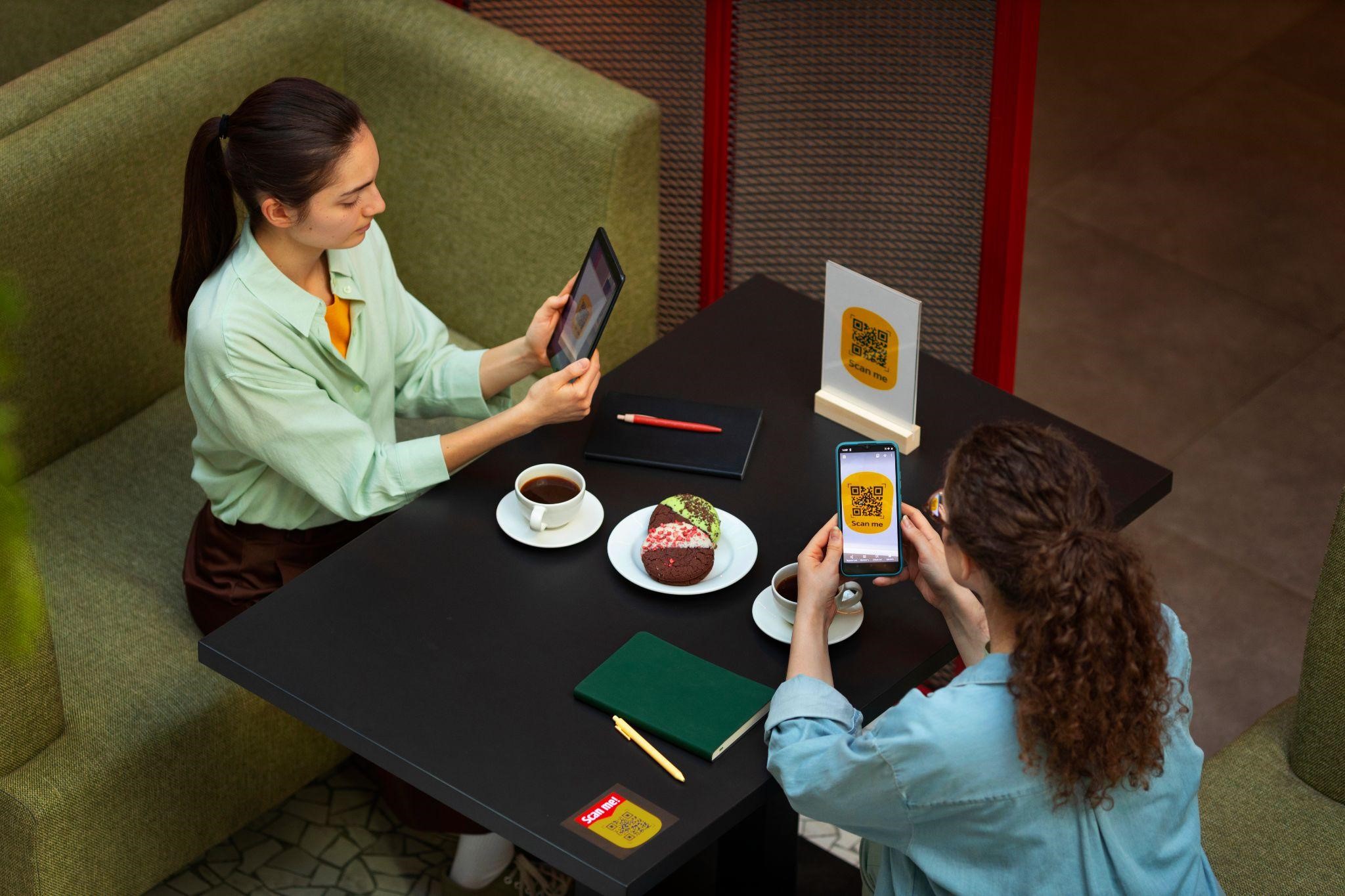
A potential customer is sitting in Scottsdale deciding where to eat tonight. They pull out their phone, type “best Mexican restaurant near me,” and start scrolling through results. Within thirty seconds they have clicked on two or three options, glanced at the menus, checked the photos, and made a decision.
If your restaurant is not appearing in those results or if your website loses them the moment they land on it that customer is going somewhere else. Not because your food is worse. Because your digital presence did not do its job.
This is the reality for restaurant and hospitality businesses in Arizona right now. The competition for local search visibility is real, the stakes are high, and the gap between restaurants with a well-built web presence and those without one is widening every year.
This article explains exactly how industry-specific restaurant website design drives local search performance and what the specific elements are that turn a website from a digital brochure into a genuine customer acquisition tool.
Not all websites serve the same purpose, and not all website design challenges are the same. A restaurant website has a specific and demanding job to do.
It needs to:
Generic website templates even well-designed ones are not built with this specific conversion path in mind. An experienced web design company in Phoenix that understands the restaurant and hospitality sector builds with all of these requirements integrated from the start, not added as afterthoughts.
Most restaurant owners think of local visibility as a Google Business Profile problem and Google Business Profile matters enormously. But the website behind that profile is what determines whether a visitor stays, trusts, and acts.
Local search ranking for restaurants depends on a combination of factors:
Google Business Profile signals
Website signals that support local ranking
A restaurant website design in Arizona that is built with these signals in mind does not just look good it actively contributes to the restaurant’s ability to be found by the right customers at the right moment.
If there is one non-negotiable in restaurant website design, it is mobile performance. The overwhelming majority of restaurant searches happen on smartphones often while someone is already out, already hungry, and making a real-time decision.
A website that is not optimized for mobile does not just perform poorly aesthetically. It actively costs the restaurant customers. Slow load times, menus that require pinching and zooming, reservation buttons that are hard to tap, and photos that do not load correctly all create friction that sends visitors directly to a competitor.
Mobile-friendly web design for restaurants means:
This is not just a user experience issue. Google uses mobile performance as a direct ranking signal. A site that performs poorly on mobile ranks lower in local search results meaning fewer people ever see it, regardless of how good the restaurant actually is.
For most restaurants, the menu page is the highest-traffic page on the website. It is the page visitors go to first, the page that most influences the decision to visit or order, and the page that most directly represents what the restaurant is.
It is also one of the most commonly mishandled pages in restaurant website design.
Common menu page mistakes:
A well-designed menu page:
A beautiful restaurant website that nobody finds is a missed opportunity. Search engine optimization for restaurants is what connects the website to the people actively looking for what you offer.
Restaurant SEO is local by nature. It is about ranking for searches like “best Italian restaurant in Tempe” or “brunch spots open Sunday Scottsdale” searches with high commercial intent from people who are ready to make a decision.
The core components of effective restaurant SEO:
Location-specific keyword integration
Content throughout the website should naturally include the restaurant’s location, neighborhood, cuisine type, and the specific occasions it serves date night, family dining, business lunch, happy hour. These are the terms local searchers use and the terms the website needs to reflect.
Schema markup for restaurants
Structured data markup tells search engines exactly what the business is name, address, phone, hours, cuisine type, price range, menu URL, and more. This information powers rich results in search and supports local pack rankings. It is a technical SEO element that is easy to implement correctly from the start and difficult to retrofit onto a poorly built site.
Google Business Profile alignment
The name, address, and phone number on the website must exactly match the Google Business Profile listing. Inconsistency between these signals confuses search engines and weakens local ranking. SEO experts in Phoenix managing restaurant clients ensure this consistency is maintained across every platform where the restaurant appears.
Review generation strategy
Online reviews are a direct local ranking factor. A well-designed restaurant website makes it easy for satisfied customers to leave reviews through prominent links, post-visit email follow-up, and QR codes at the point of service.
Local content
Blog content, event pages, seasonal menu announcements, and community involvement posts all contribute to local search visibility over time. A restaurant that publishes relevant local content consistently builds authority with search engines and stays visible for a broader range of relevant searches.
Getting traffic to the website is only half the equation. The other half is converting that traffic into actual customers reservations, online orders, phone calls, and walk-ins.
Conversion-focused restaurant website design prioritizes:
Clear calls to action
Every page should have a primary action the visitor can take Reserve a Table, Order Online, View Menu, Call Now. These buttons should be prominent, visually distinct, and accessible without scrolling on mobile.
Online reservation integration
Reservation tools integrated directly into the website whether through a native booking system or a third-party platform reduce friction significantly. Every additional step between interest and commitment loses a percentage of visitors.
Online ordering integration
For restaurants that offer takeout or delivery, seamless online ordering integration on the website rather than relying entirely on third-party delivery platforms reduces commission costs and keeps the customer relationship with the restaurant rather than the platform.
Trust signals
Reviews, awards, press mentions, and photography all serve as trust signals that reduce the hesitation a first-time visitor feels before committing to a new restaurant. These elements should be present and visible without requiring visitors to seek them out.
Location and directions
The address, hours, and an embedded map should be immediately accessible. Many restaurant visitors are making decisions in real time while already out making directions one of the most practically important elements on the site.
Restaurants sell an experience, not just food. The visual design of the website photography in particular communicates atmosphere, quality, and personality before a visitor reads a single word.
High-quality food and interior photography is one of the highest-ROI investments a restaurant can make in its digital presence. Poor photography dark, unflattering, outdated actively undermines confidence in the restaurant regardless of actual quality.
What effective restaurant photography covers:
A skilled website design agency in Arizona integrates photography strategy into the design process ensuring images are optimized for web performance, displayed at the right sizes across devices, and structured to support both user experience and search engine signals.
A strong website is the foundation but it works best as part of a broader local digital marketing approach.
For Arizona restaurants, this means:
Paid local search advertising
Running targeted ads for high-intent local searches “restaurants open now near me,” “best steakhouse Scottsdale” captures demand from customers actively looking to visit right now. Paid search is especially valuable for new restaurants building organic visibility, for seasonal promotions, and for events.
Social media integration
Instagram and Facebook remain high-value channels for restaurant marketing in Arizona. A website that integrates social feeds, makes sharing easy, and drives traffic back from social platforms creates a connected digital presence that reinforces visibility across channels.
Email marketing
Building a customer email list through the website through reservation capture, online ordering, and opt-in offers creates a direct communication channel for promotions, new menu announcements, and seasonal events. Email remains one of the highest-ROI marketing channels for restaurants with an established customer base.
Analytics and performance tracking
A well-built website includes proper analytics tracking from day one so the restaurant knows which pages are performing, where visitors are coming from, how many are converting to reservations or orders, and where they are dropping out of the funnel. This data informs every subsequent marketing decision.
Digital marketing services in Arizona that are built specifically for local businesses rather than generic national strategies take all of these channels into account and build them around the specific competitive landscape of the Arizona market.
Choosing the right web design and digital marketing partner matters as much as the design itself. Here is what restaurant owners should evaluate:
Local market knowledge
An agency that understands the Arizona market its competitive dynamics, seasonal patterns, and local search behavior brings contextual knowledge that a generic national agency cannot replicate. A digital marketing agency in Phoenix with demonstrated local experience is better positioned to build a strategy that performs in your specific market.
SEO integrated from the start
Many web design agencies build websites and then treat SEO as a separate, later-stage service. The best agencies build SEO into the site architecture, content structure, and technical foundation from day one because retrofitting SEO onto a poorly structured site is harder, more expensive, and less effective than building it correctly from the beginning.
Demonstrated results in similar industries
Ask for examples of restaurant or hospitality websites the agency has designed and evidence of the performance those sites have achieved local search rankings, traffic growth, conversion improvements. Results matter more than aesthetics.
Transparent process and communication
A reliable agency has a clear, documented process discovery, strategy, design, development, launch, and ongoing optimization. You should always know where your project stands and what is happening next.
Ongoing support and optimization
A website is not a one-time project. As search algorithms evolve, competitor sites improve, and your restaurant’s offerings change, the website needs to evolve with them. An agency that offers ongoing support and continuous optimization is a longer-term partner in growth, not just a vendor for a single deliverable.
A restaurant website in Arizona is not just a digital business card. It is a local search asset, a conversion tool, a brand experience, and a customer acquisition system all in one.
The restaurants winning local search visibility in Phoenix, Scottsdale, Tempe, and across Arizona are not necessarily the ones with the biggest marketing budgets. They are the ones with websites that were built correctly with mobile performance, local SEO, conversion design, and food service-specific user experience all integrated from the start.
If your current website is not generating the local visibility and reservation volume your restaurant deserves, the gap is almost certainly in how the site was built not in the quality of what you serve.



Restaurant searches are overwhelmingly local and mobile. A website built with local SEO, mobile performance, and conversion in mind directly supports your ability to appear in local search results and convert those visitors into reservations or orders. Generic websites not built for restaurant-specific search behavior underperform significantly compared to industry-specific builds.
A mobile-friendly restaurant website loads in under three seconds, displays the menu as readable text rather than a PDF, places the reservation or order button in prominent position without scrolling, uses click-to-call phone numbers, and displays photography correctly across all screen sizes. Mobile performance is also a direct Google ranking signal sites that perform poorly on mobile rank lower in local search results.
Restaurant SEO focuses on ranking for local search terms cuisine type, location, dining occasion that people in your area are actively searching. It involves location-specific keyword integration throughout the site, structured data markup, Google Business Profile alignment, review generation, and ongoing content that builds local search authority over time.
Text on the website, always. PDFs are not readable by search engines, do not display well on mobile devices, and cannot be updated quickly when pricing or availability changes. A properly coded text menu supports both user experience and local SEO in ways a PDF cannot.
Organic SEO results typically become visible over three to six months as the site builds authority and search engines index and rank new content. Technical improvements fixing slow load times, adding schema markup, improving mobile experience can have faster impact. Paid local search advertising can generate visible results within days of launch for restaurants that need immediate traffic.
A well-built website is the foundation, but it works best as part of a broader local marketing strategy. Paid search advertising, social media, email marketing, and review management all work together to build sustained local visibility and customer acquisition. A marketing agency in Arizona that integrates these channels with the website creates a more complete and effective growth system than any single channel alone.
The first step is a conversation about your restaurant’s goals, current digital presence, and competitive landscape. Envision Marketing Agency offers a free website audit to identify where opportunities are being missed and what improvements would have the highest impact. You can also book a strategy call directly through the website.

At Envision Marketing Agency, we want you to love your website — and we’re committed to working closely with you to get it right. To keep the project efficient and ensure a high-quality experience for every client, we’ve established the following revision policy:
Each website package includes a set number of revision rounds as outlined below:
| Package | Rounds of Revisions |
|---|---|
| Starter Package | 1 Round |
| Standard Package | 2 Rounds |
| Business Package | 3 Rounds |
| eCommerce Package | 5 Rounds |
A “round” of revisions refers to a batch of feedback provided at one time, ideally consolidated. You’ll have the opportunity to share your requested edits, and we’ll apply them all in that round.
Revisions include reasonable adjustments such as:
Text changes or corrections
Image swaps
Layout tweaks (alignment, spacing)
Color/font adjustments (within branding scope)
The following would require additional time and may incur extra fees:
Complete redesign or layout overhauls
New pages or features not in the original scope
Structural changes (e.g., switching to a different platform or template mid-project)
Requests submitted after the final revision round is complete
To keep projects on track:
Revisions must be submitted within 3 business days of delivery
All feedback should be consolidated in each round (multiple emails or scattered feedback may delay turnaround)
Revisions are typically completed within 1–3 business days depending on complexity
We offer additional revisions at a flat rate of $49 per round or $99/hour for larger scope adjustments.
This ensures you still have flexibility while allowing us to maintain efficiency and quality.